Oxhagsskolan
Category
Location
Stockholm, Sweden
Client
SISAB, Utbildningsförvaltningen Stockholm Municipality
Contract period
2023-2025
Contact
Jonas P. Berglund
Landscape area
5600 m2
Image credits
Kragh Berglund
On behalf of SISAB and Utbildningsförvaltningen, Kragh Berglund’s Stockholm office has redesigned a total of seven existing schoolyards in Stockholm forming The Green Schoolyards.
Bringing the forest into the schoolyard
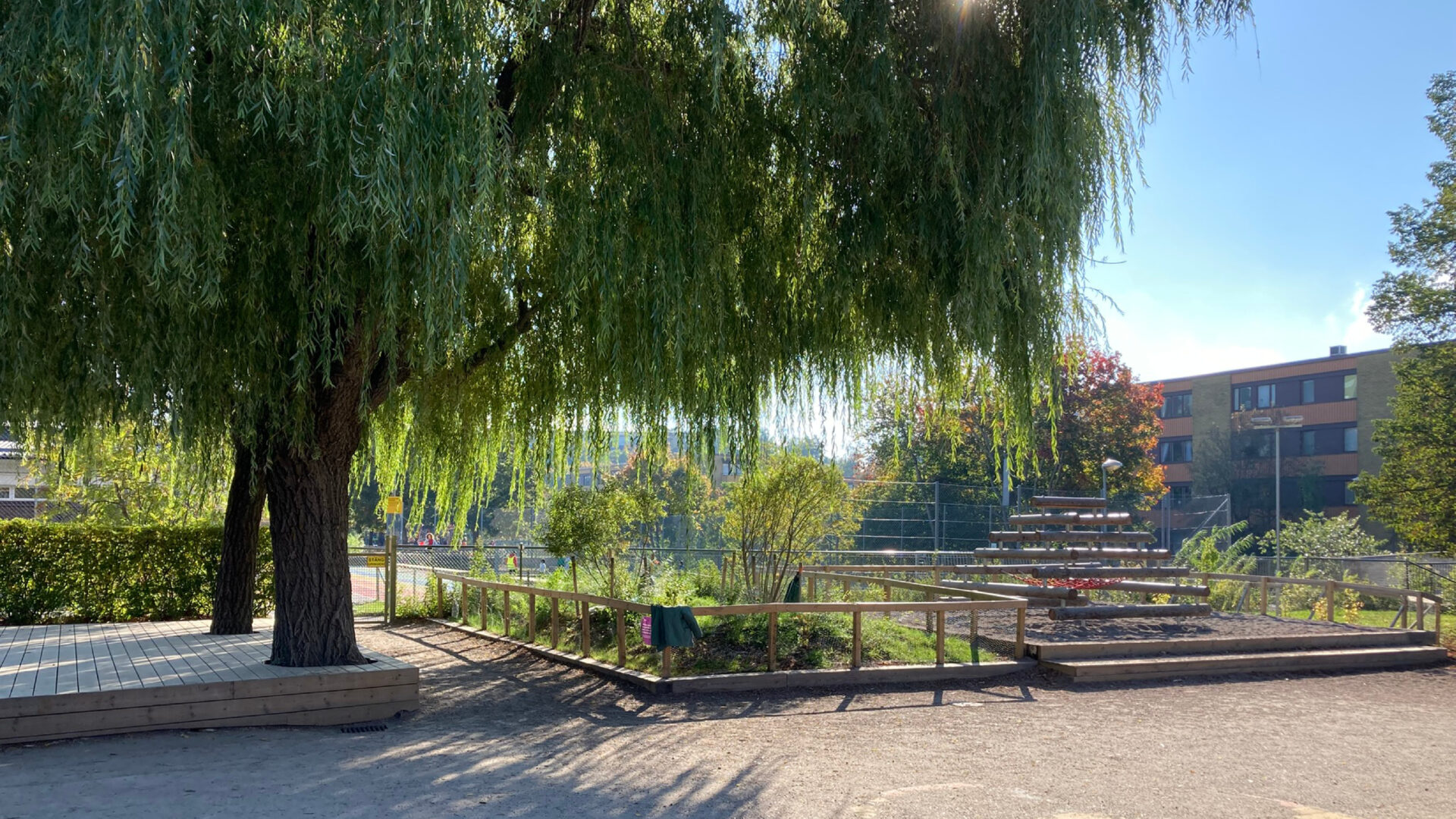
With Oxhagsskolan being one of SISAB’s most tree-rich school the transformation of Oxhagsskolan focused on strengthening the existing woodland character and making nature an even more integral part of everyday play. During the dialogue process with the children, they expressed a desire for more forest-inspired play, including a woodland play area and a playhouse. Their ideas informed the initial design proposal and helped shape the development of the schoolyard.
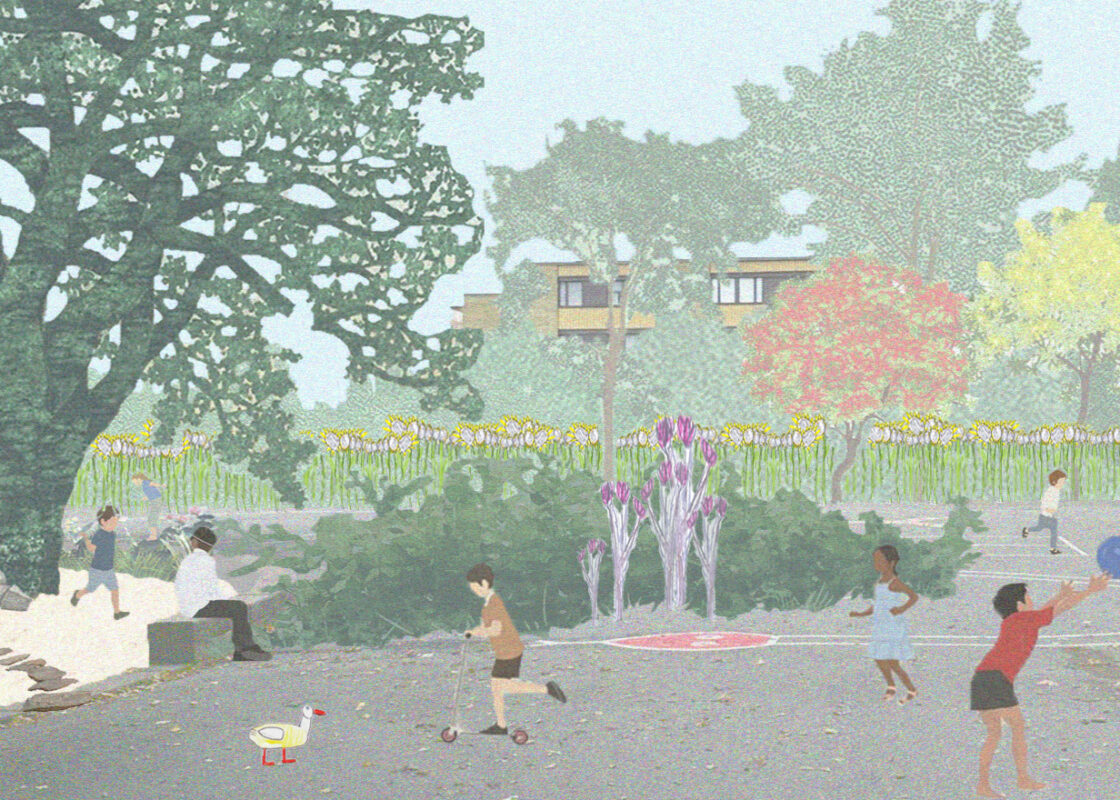
Vision for Oxhagsskolan, collage.
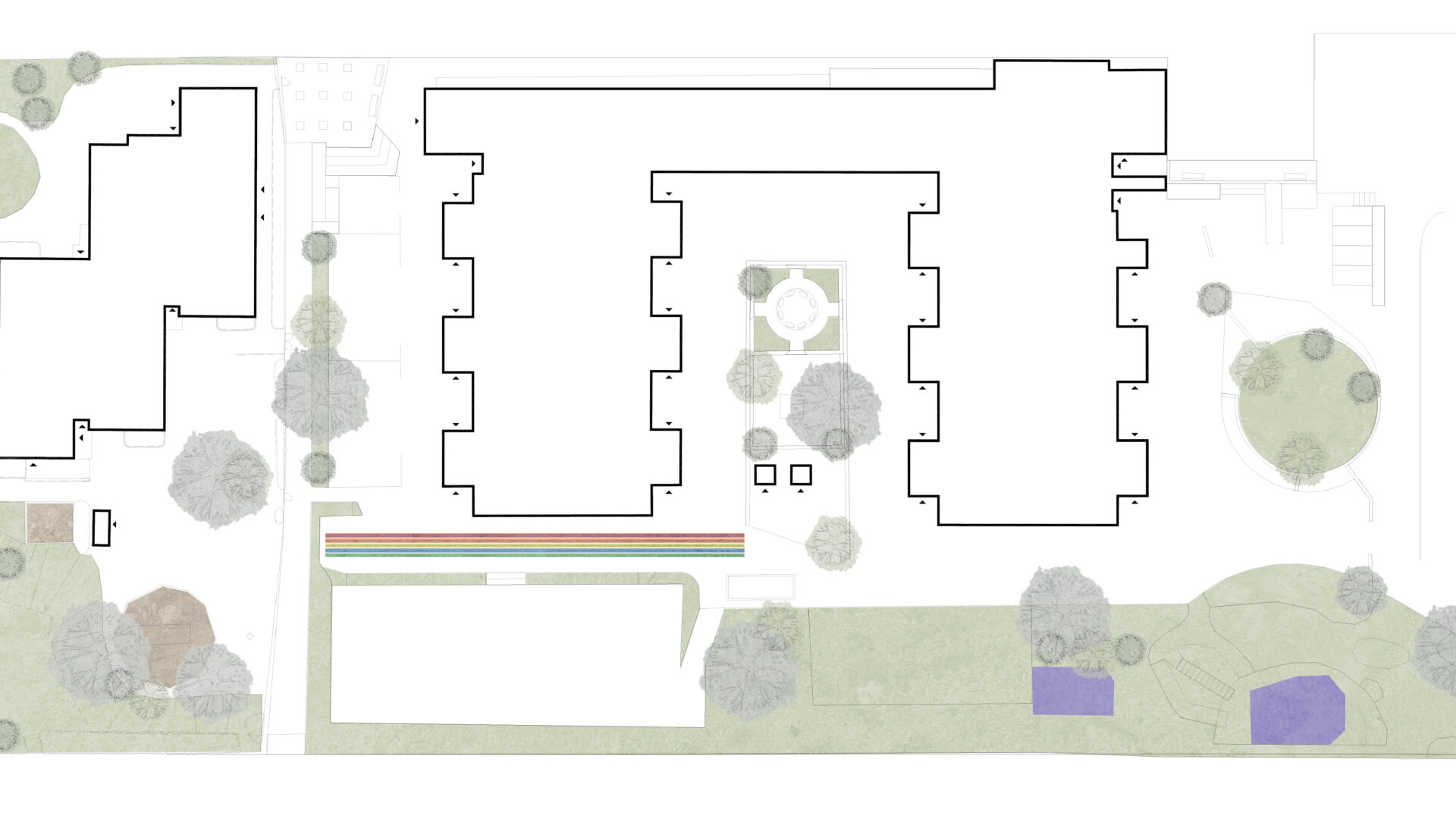
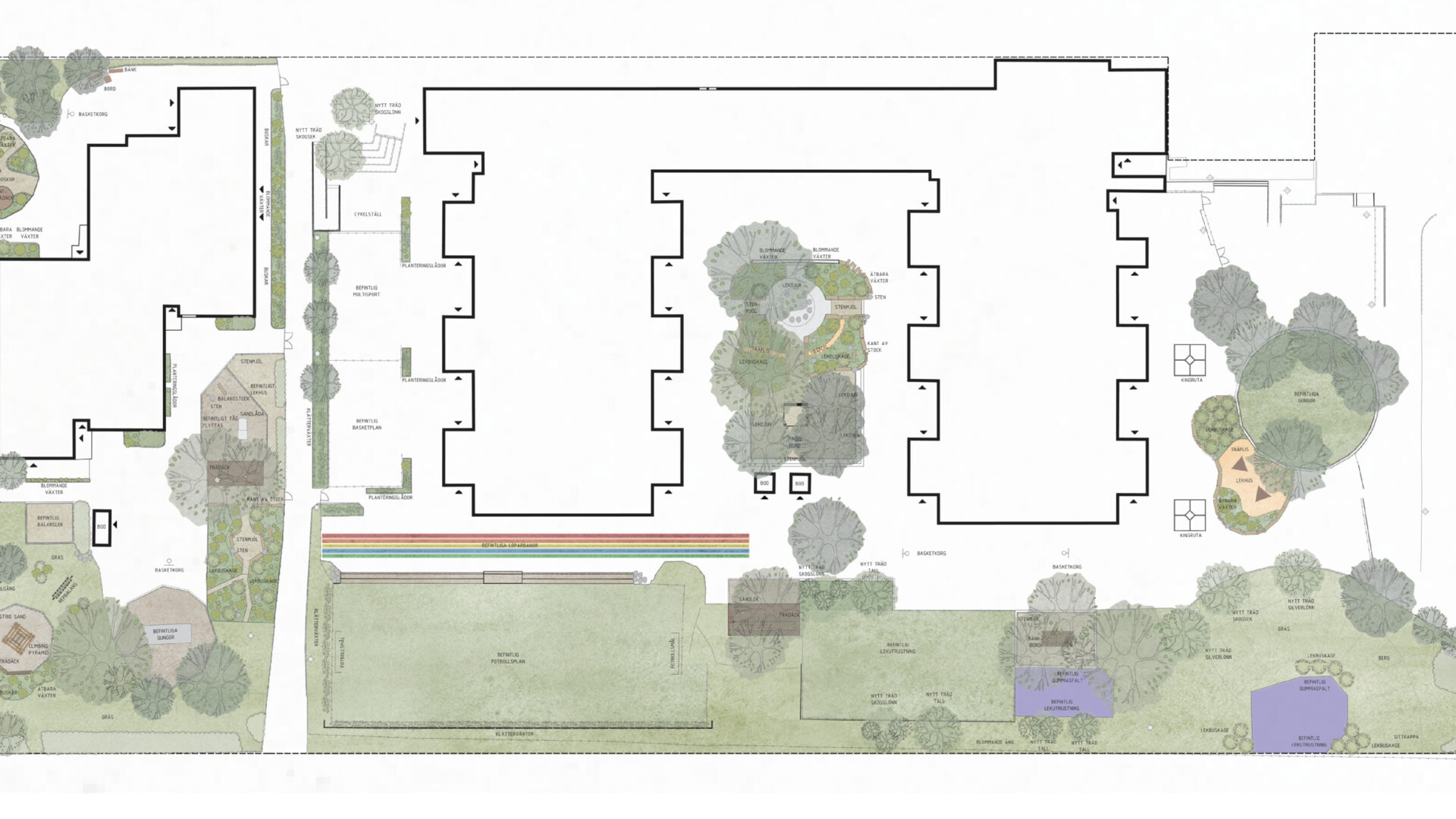

Oxhagsskolan before and after transformation.
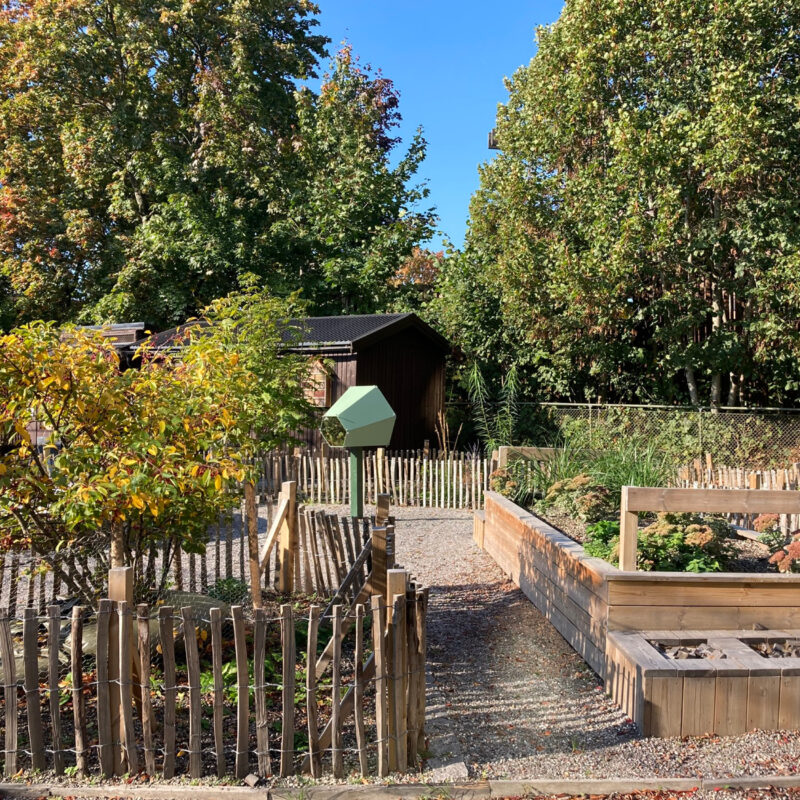
New activity zones have been introduced, integrating nature into the schoolyard in playful and sensory ways. Through the addition of play-enhancing shrubbery and stronger connections to the site’s existing green qualities, the schoolyard has developed a more woodland-like character.The ambition was to create a more forest-like environment, with spaces that encourage children to explore, move and engage with nature on their own terms.
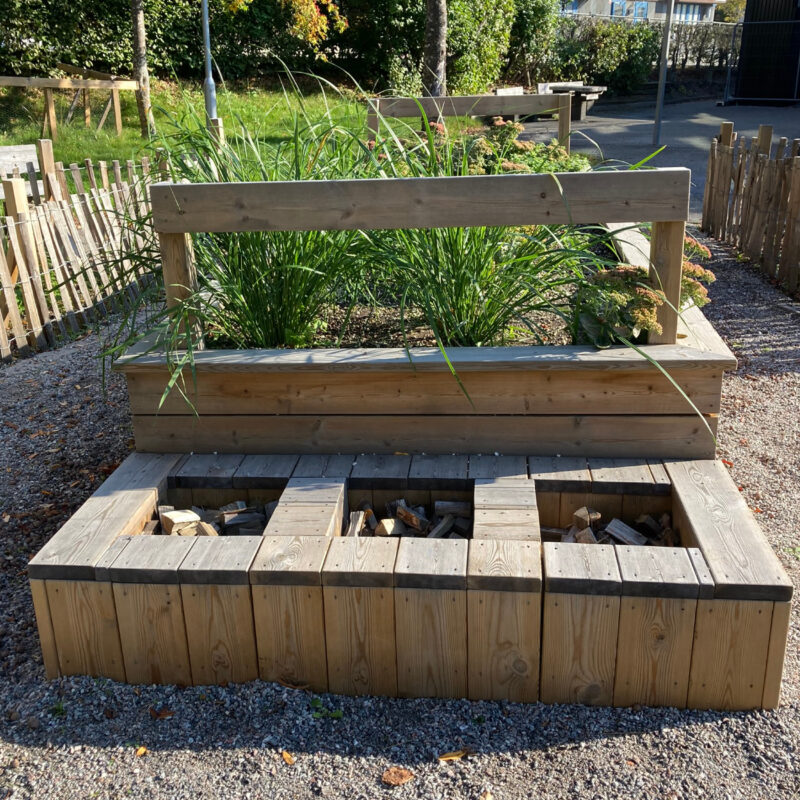
A key focus has been to create a clear balance between active and quieter areas. The existing slope has been transformed into an active play zone with varied levels, inviting children to climb, run and explore. At the same time, quieter areas with shrubbery and places to sit provide opportunities to retreat and spend time surrounded by greenery.
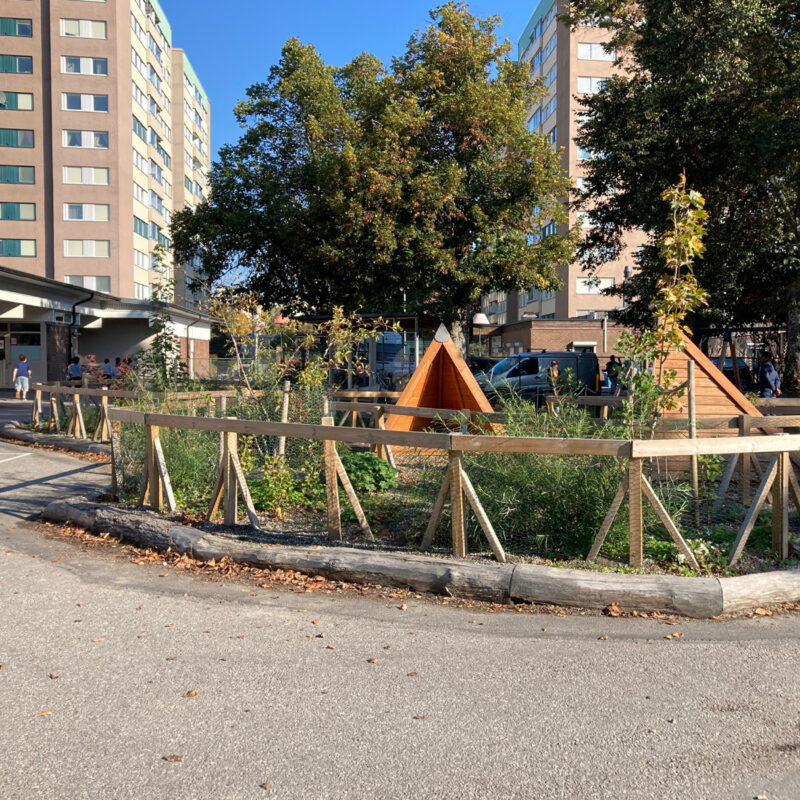
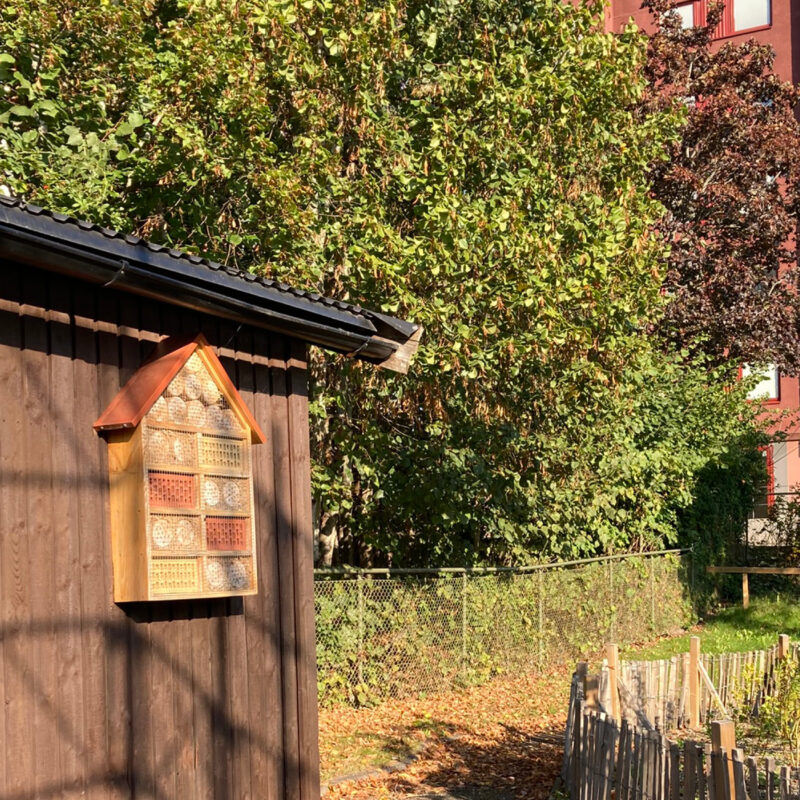
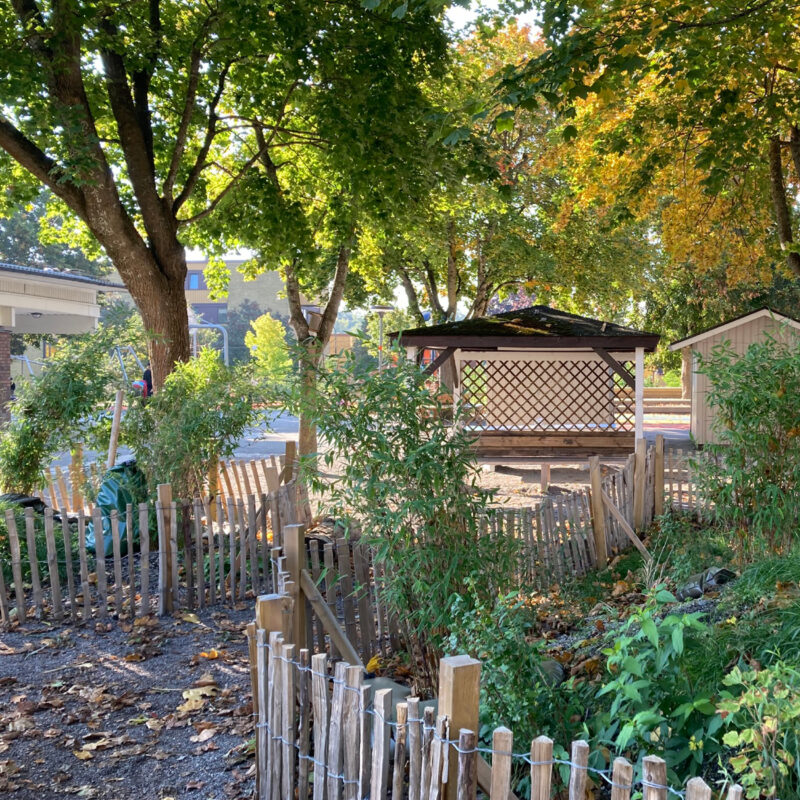
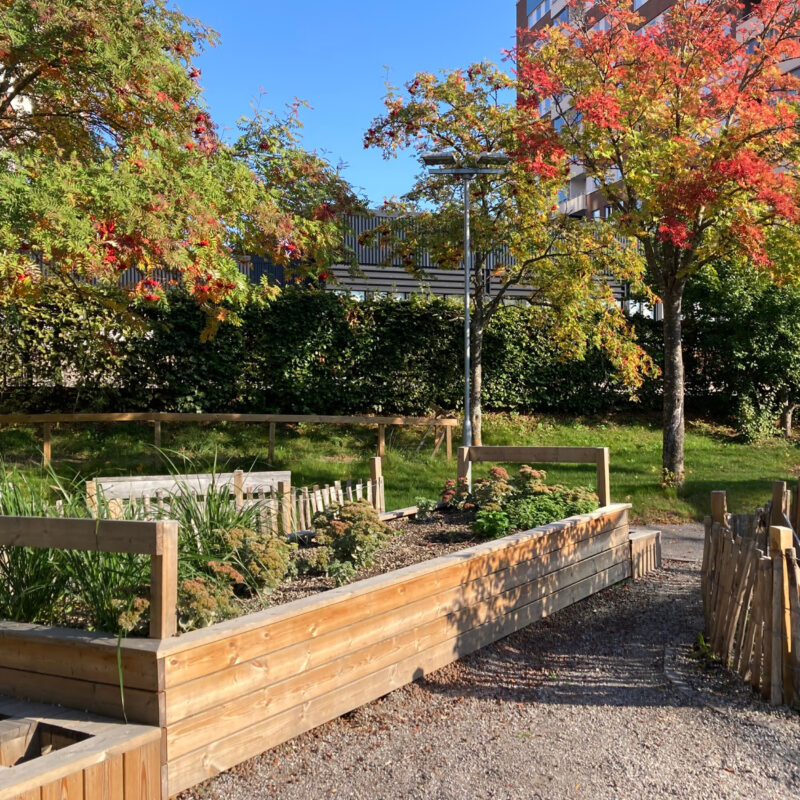
The planting has been carefully selected to offer a variety of colours, scents and leaf textures, stimulating children’s curiosity and inviting them to interact with their surroundings. In addition to creating new play opportunities, the increased greenery helps reduce heat and contributes to a cooler and more pleasant microclimate in the inner schoolyard.
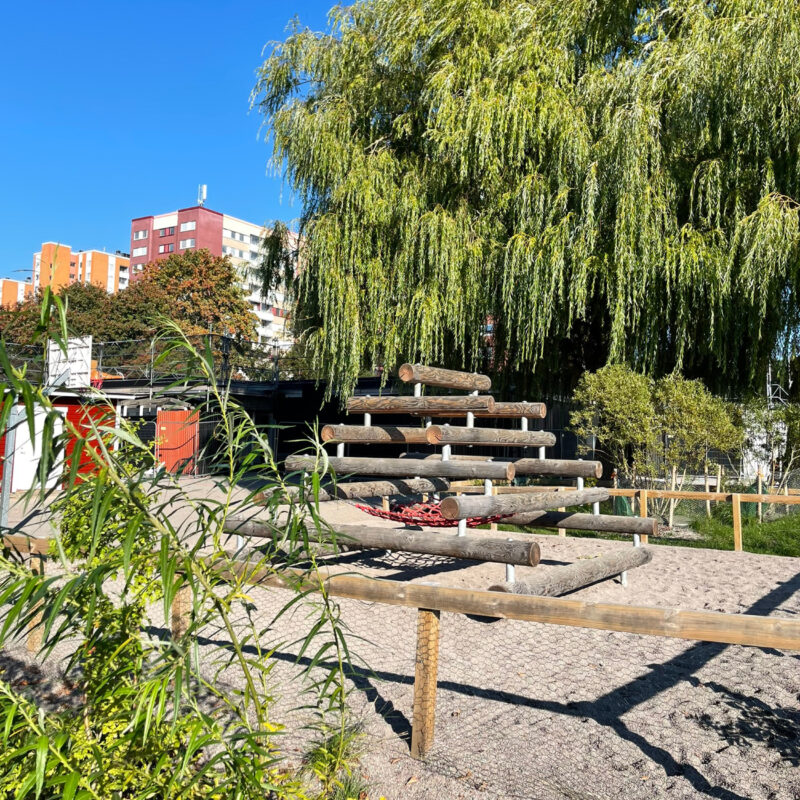
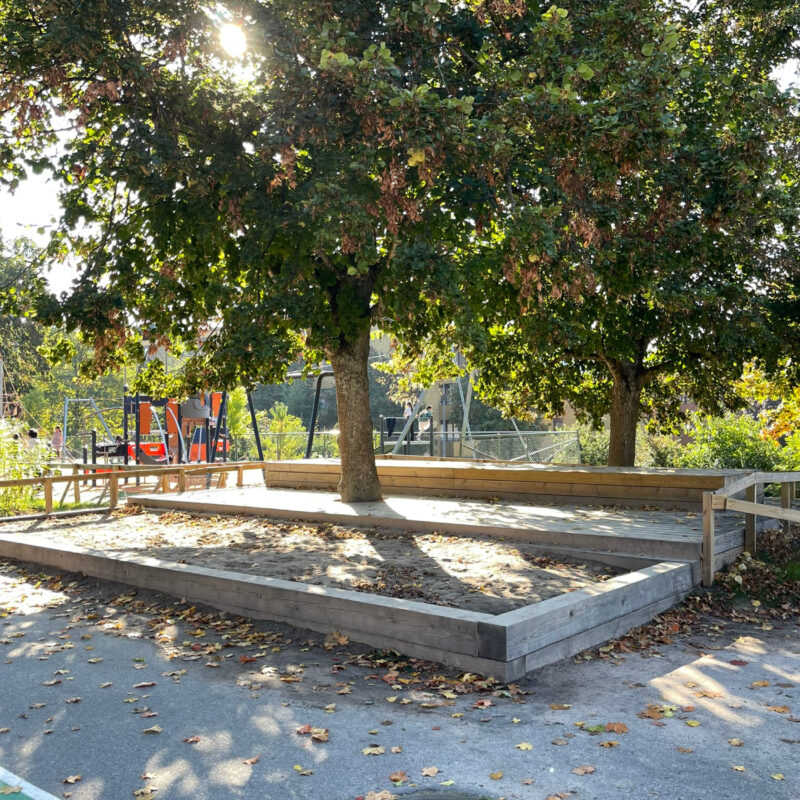
Previously, artificial turf areas were replaced with planted areas to create play-enhancing shrubbery where children can play freely among the vegetation. These planting areas form smaller spaces that encourage quieter play, exploration and sensory experiences.
Read more about the project here:
https://www.svt.se/nyheter/lokalt/stockholm/gronare-skolgard-ska-fa-barn-att-rora-sig-mer
gron-och-aktiv-skola-24.09.02.pdf
Stockholm rustar med fler klimatanpassade skolgårdar | Rödgröna styret i Stockholms stad
Mer grönska på Oxhagsskolans skolgård – Stockholms stad
Want to learn more?
Contact Jonas P. Berglund
jpb@kragh-berglund.dk
+46 72 210 98 86