More Than a Station: Creating Community at Asnæs
Public spaces
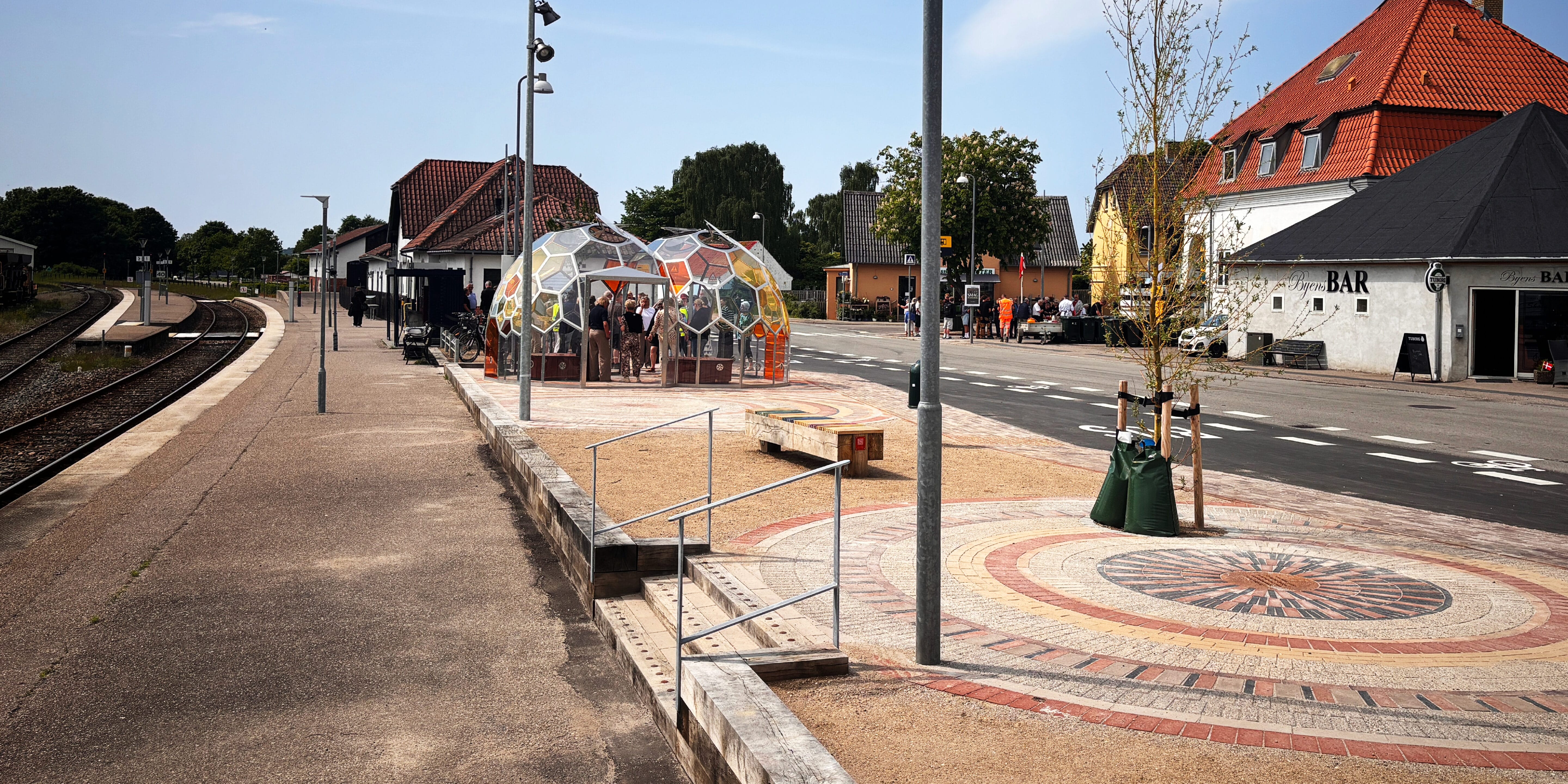
Asnæs Station has been transformed into a vibrant public space that strengthens connections, local identity, and everyday life in the town. The project reimagines the station area as both a welcoming arrival point and a gathering place for residents, with a strong focus on reuse, sustainability, and youth involvement.
We spoke with landscape architect Erika Simonsen about the ideas behind the project, the importance of involving young people in shaping their town, and how thoughtful design can help create safer, greener, and more social public spaces in smaller communities.
What problem were you trying to solve at Asnæs Station?
The project aimed to create a greater sense of safety, belonging, and local identity. We wanted to engage young people in a small provincial town and give them a feeling of ownership over the space. At the same time, we sought to clarify the traffic hierarchy, improve orientation, and create a meaningful meeting place for the community.
An important aspect of the project was strengthening the connection between the station area and Asnæs town centre. This was achieved through paving and a sequence of public spaces along Enghaven Road, which can periodically be closed to traffic and transformed into a marketplace between the road’s narrowed sections.
How did local young people influence the design?
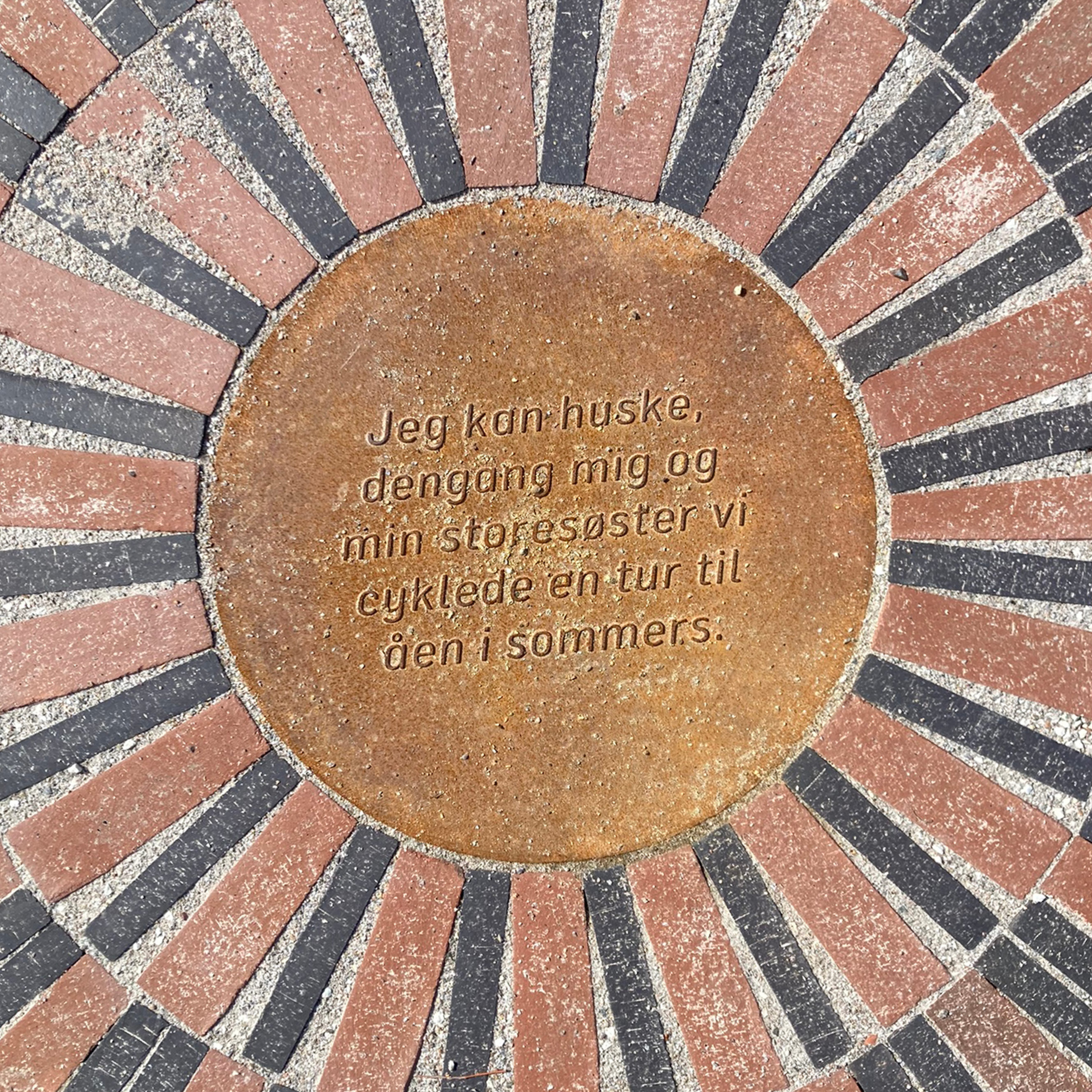
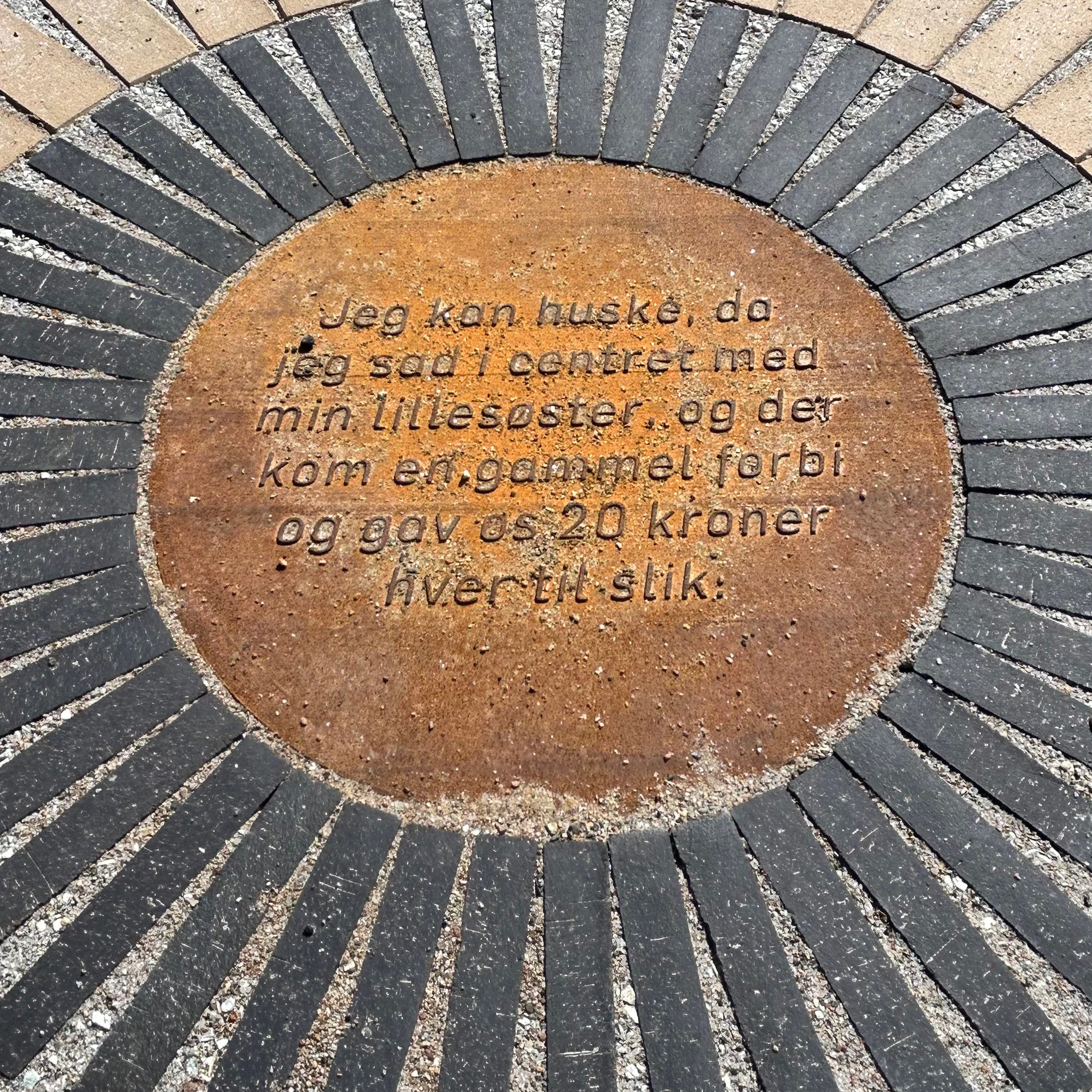
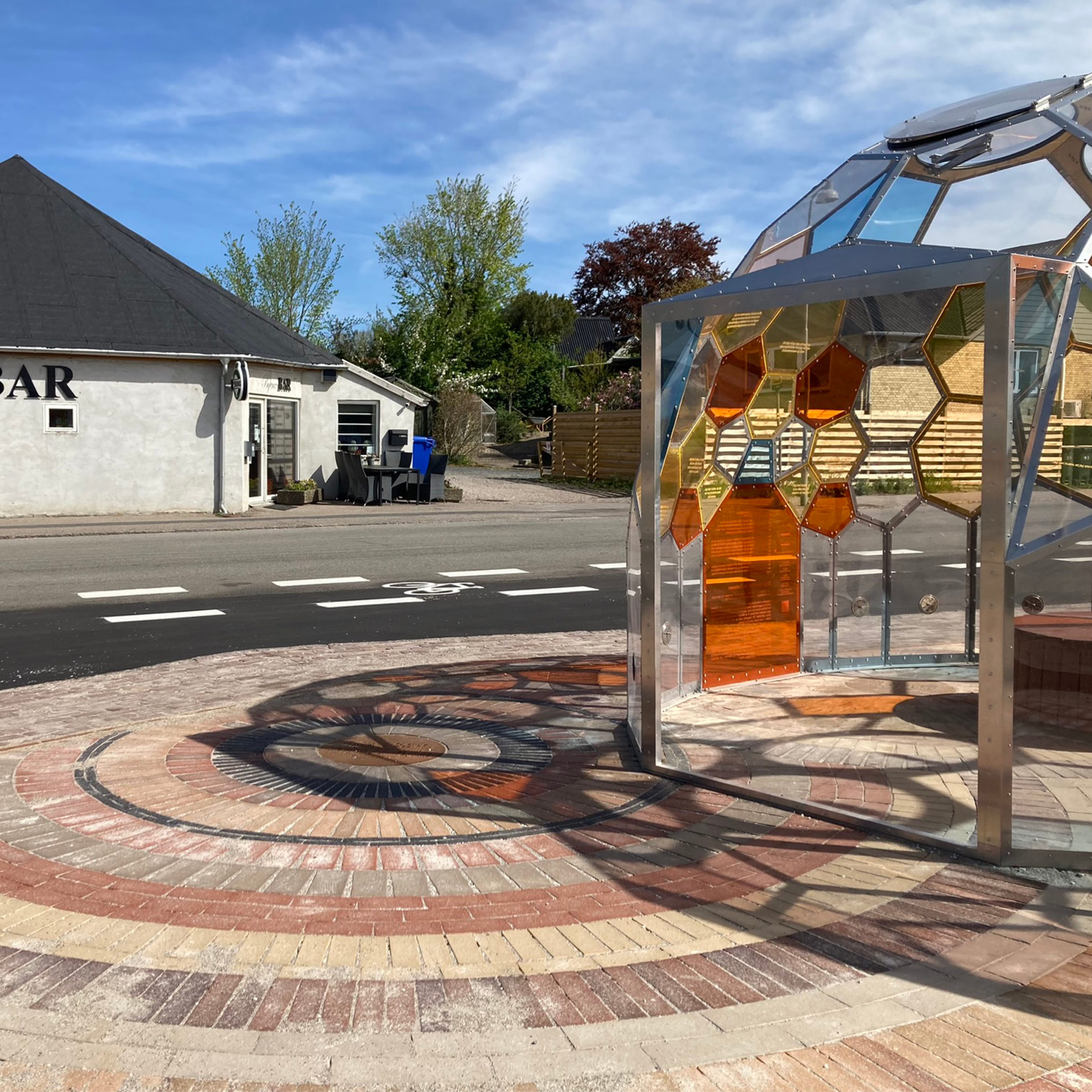
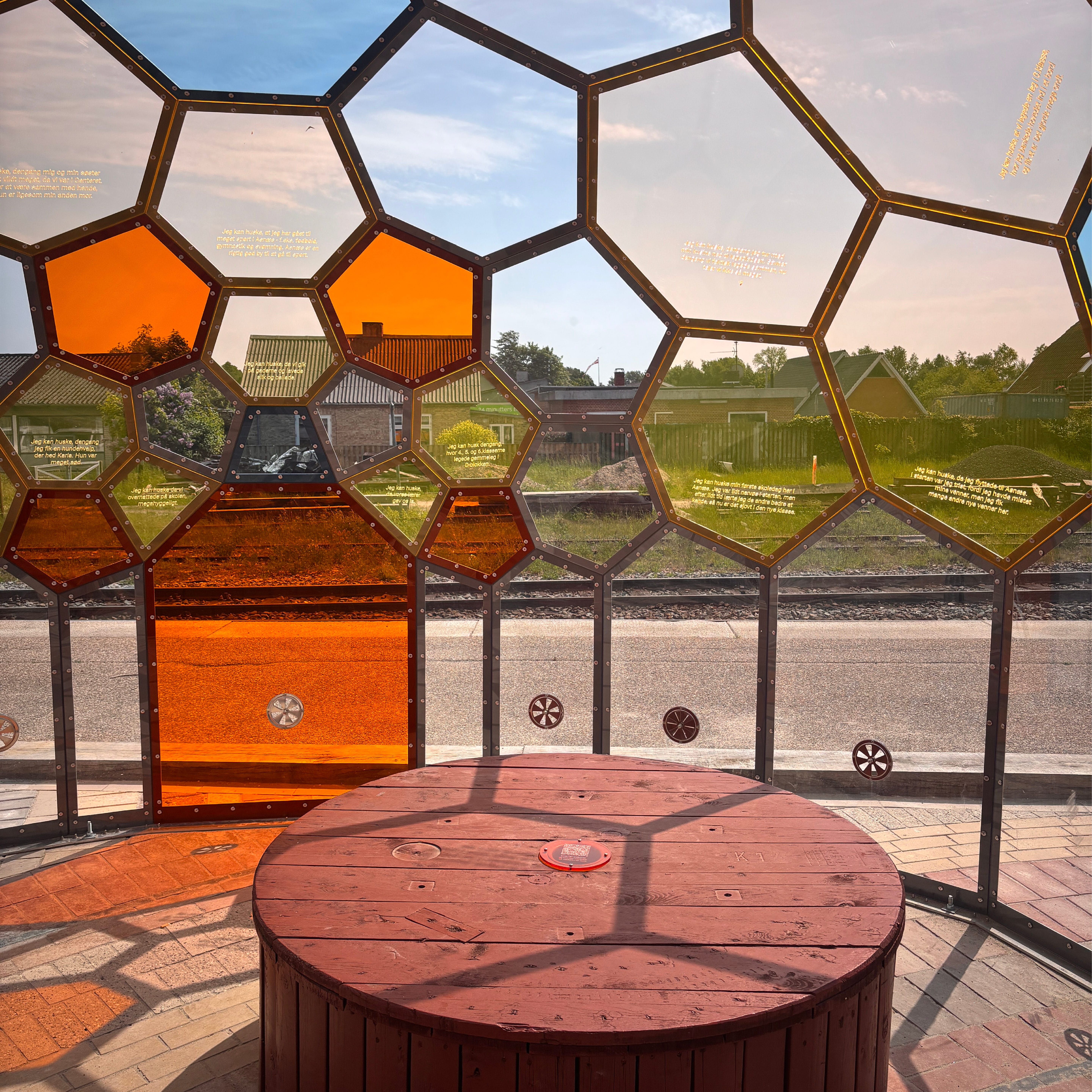
The involvement of local young people became visible in many parts of the project. Their contributions include the cast-iron poetry tiles and poetry featured in the pavilion through the Njord initiative, furniture made from recycled cable drums, a mural at Ibs Plads, and benches incorporating recycled plastic railway sleepers. The plastic sleepers themselves were produced together with local young people.
Can you share a specific idea from a young person that made it into the final design?
Many beautiful texts written by local young people were incorporated into the project. Excerpts from these texts are cast into iron tiles and placed at the centre of circular paving patterns, creating small stories that spread through the space like “ripples on water.”
What was the station area like before?
The area suffered from a poor traffic hierarchy and weak connections to the rest of the town, making orientation difficult. The paving was worn, and the station environment felt anonymous, dominated by large areas of asphalt.
What will feel different the first day the project is finished?
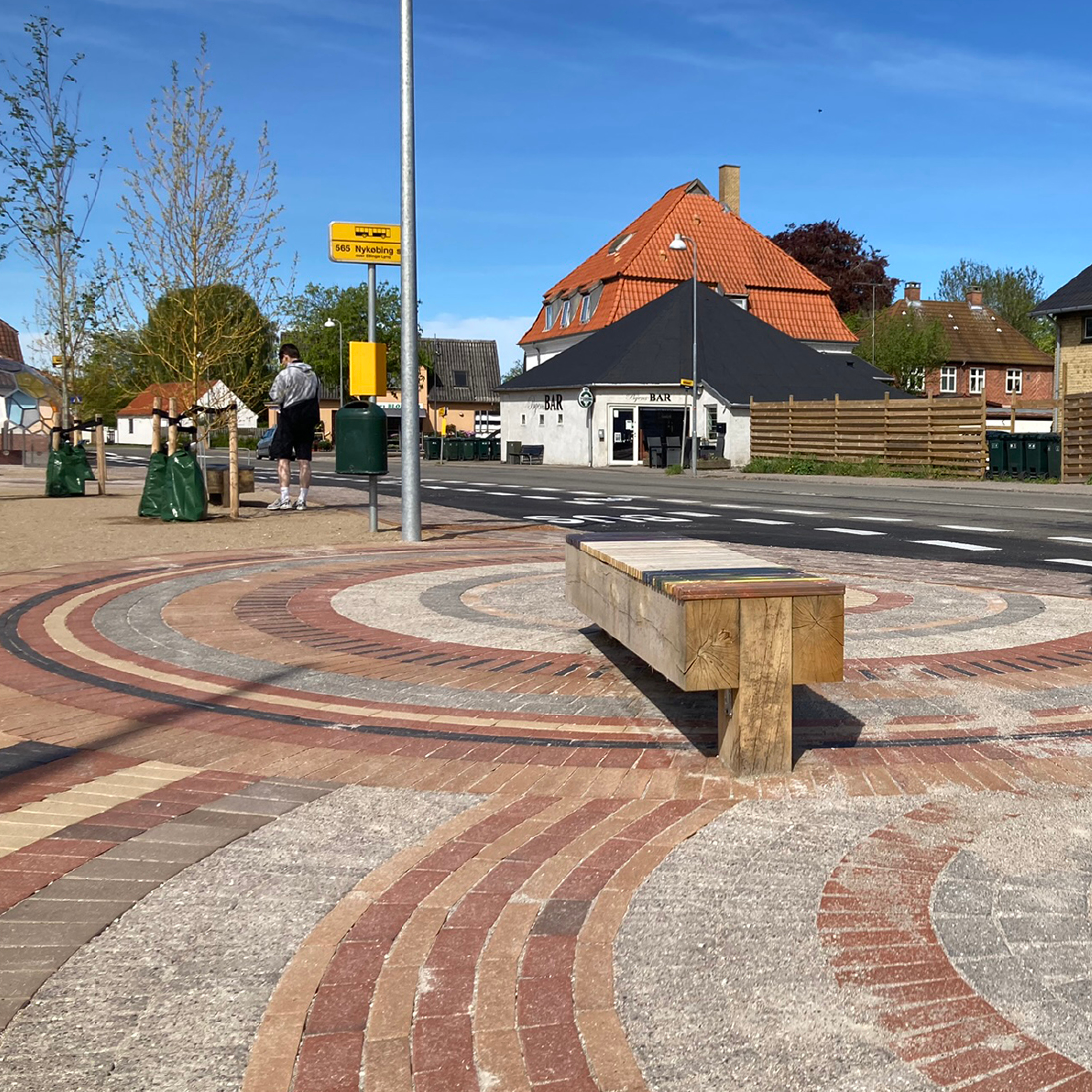
Visitors will be welcomed by vibrant paving patterns that resemble a colourful carpet. There will be places to sit, details to discover, and small stories embedded throughout the space. The station will become much more visible from the train and, hopefully, a place where people want to stop and spend time.
Why focus on lighting, seating, and greenery specifically?
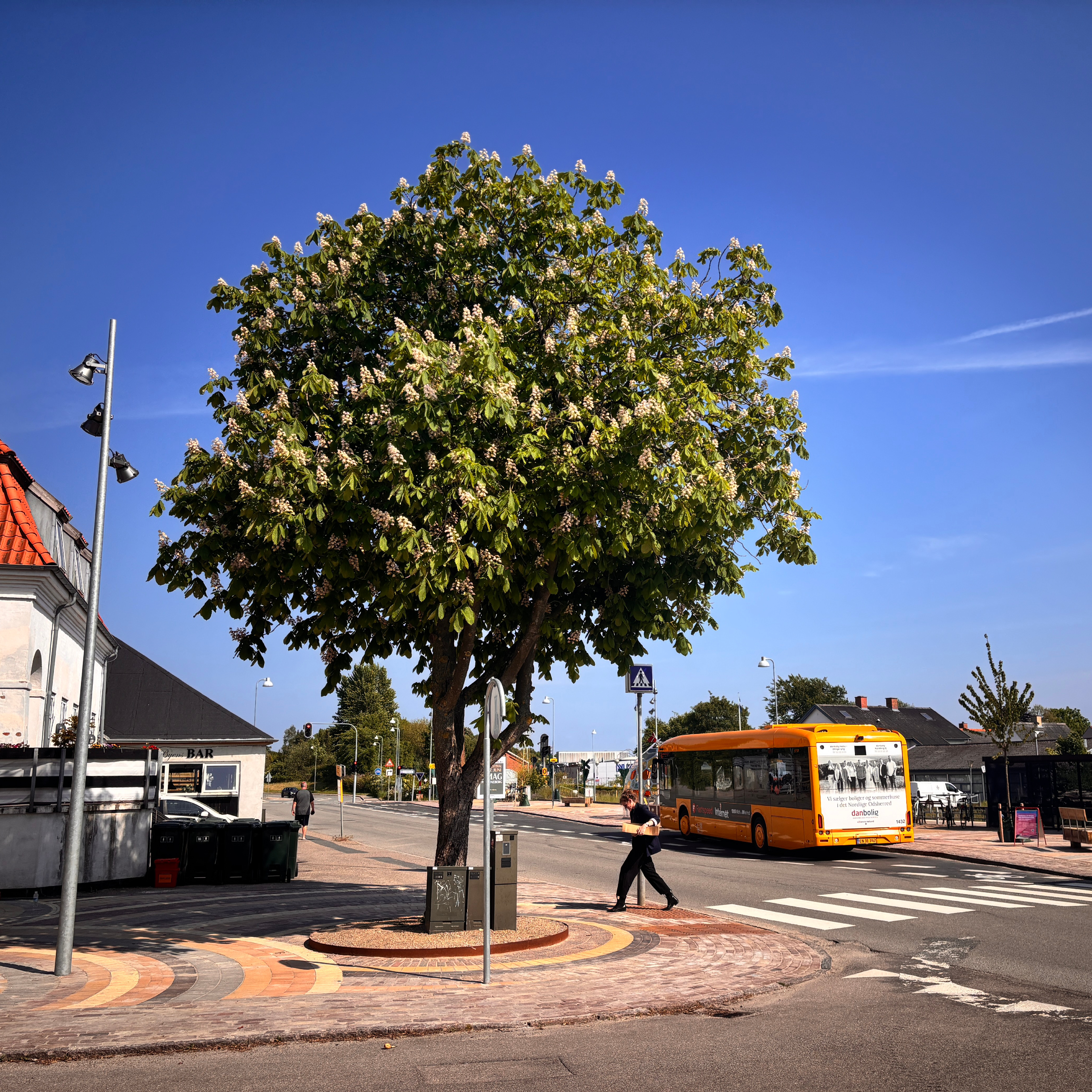
These elements help create a sense of safety and encourage people to stay rather than simply pass through. Light and colour make the area more visible and inviting, while green spaces are simply more pleasant and beautiful places to spend time. Trees have therefore been planted to soften what was previously a heavily paved station square.
What makes a space feel safe rather than just functional?
I believe local ownership and connection are among the most important factors. When people are proud of a place, it creates positive energy and a stronger sense of attachment. The detailing and materials in this project are rooted in reuse, creativity, resourcefulness, and playfulness, helping to create a warm and welcoming environment where people enjoy spending time.
How did you balance movement (transport) versus staying (public life)?
The site is relatively small, and the street space is primarily dedicated to cars and buses. We therefore sought solutions that would allow parts of the street to be temporarily reclaimed by pedestrians during events such as markets.
Within the station square itself, priority was given to benches, shelter, and informal seating opportunities integrated into the natural changes in terrain. The colourful paving patterns also help highlight pedestrian areas, making the space easier to read and navigate for everyone.
What can other small towns learn from this project?
Small towns should not be afraid to dream big. They often hold enormous potential, and in many cases the distance between ideas and implementation is much shorter than in larger cities—provided the right people are engaged and empowered.
Did anything change during the process?
When Realdania joined the project as a funding partner, they also introduced stronger sustainability requirements, particularly regarding social sustainability. This pushed the project in exactly the right direction, encouraging greater engagement with local young people and inspiring more creative thinking around paving materials and opportunities for reuse.
As a result, several design decisions had to be reconsidered midway through the process. However, the project ultimately became far more interesting and achieved a much stronger connection to the local community.
What part of the project are you most proud of?
I am most proud of the many different ways the project creates space for young people and their contributions, while still feeling like a permanent and lasting place rather than a temporary intervention.
When we began sketching and developing the concept for the recycled paving, a remarkable variety of patterns emerged. It immediately felt like the right approach and very much in tune with the times: creating flexible paving patterns that can adapt to whatever reclaimed materials are available, rather than relying on predetermined products.